STRUCTURAL DESING
WHERE ENGINEERING AND VISUAL IDENTITY BECOME ONE.
Human-oriented design → Design integrity → Human-machine visual language → Long-term vision
Human-oriented design → Design integrity → Human-machine visual language → Long-term vision
For MA-UNI, we are approaching the overall design from two complementary perspectives — STRUCTURAL and VISUAL.
Many humanoid robots are primarily optimized around engineering objectives: movement, automation, strength, sensing and task performance.
These requirements naturally influence the external appearance of the machine. Motors, cables, structural elements and other mechanical components may remain visible, creating a strong perception of industrial machinery.
MA-UNI begins from a different premise.
The project explores the relationship between:
The current platform is designed around human-scale dimensions and recognizable relationships between the major body sections.
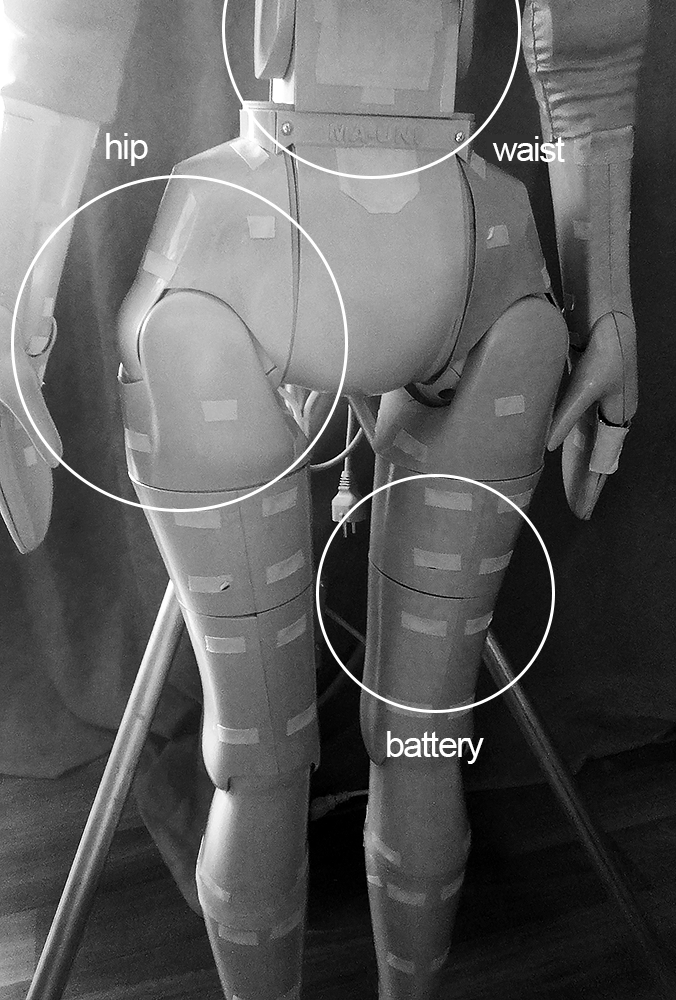
Mechanical elements are organized within the external body architecture wherever possible, allowing smoother forms and a more coherent artificial body.
The current prototype demonstrates a human-scale structure with an unusually low overall weight. The objective is to explore how efficient structural organization and lightweight materials can reduce unnecessary mass.
For a humanoid robot operating in human environments, minimizing the consequences of a potential fall can be just as important as preventing the fall itself.
Components are designed with modification and replacement in mind, allowing the architecture to evolve through successive generations.
The articulation concept permits extensive rotational movement of the limbs, waist and other body sections.
MA-UNI treats external appearance as part of the identity of the platform rather than as a secondary cosmetic layer.
MA-UNI explores an approach in which the mechanical structure and external body design are developed together.
Rather than designing a conventional robotic skeleton first and subsequently placing an external shell around it, the project attempts to integrate structural requirements into the body itself.
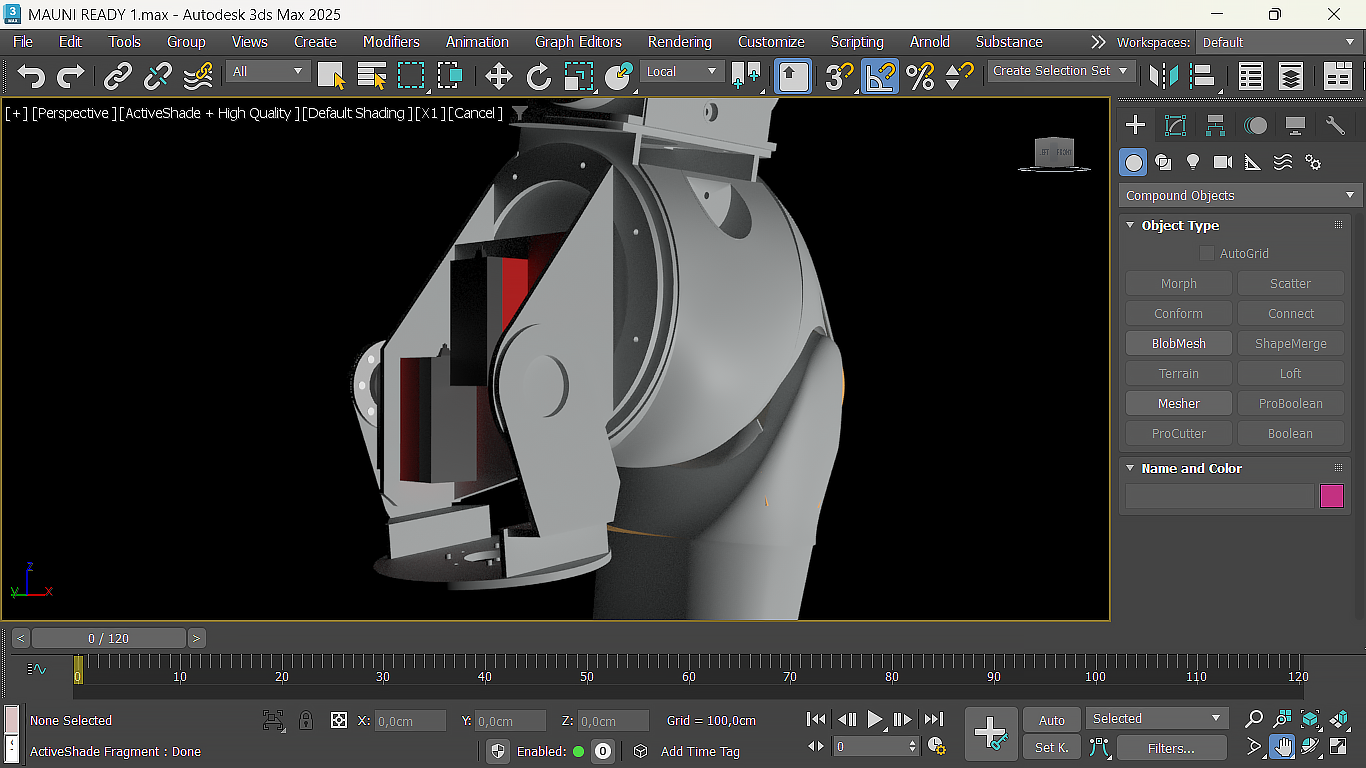
This approach allows the external body to retain smoother human-inspired forms while preserving the mechanical functionality required for articulation.
One of the distinctive characteristics of the current MA-UNI prototype is its low total mass relative to its human-scale size.
at approximately 155–160 cm human-scale height.
The construction demonstrates an approach based on efficient structural organization, lightweight components and accessible manufacturing methods.
Autonomous power batteries are integrated into the thigh sections of the prototype.
This contributes to a lower center of gravity and more balanced weight distribution.
Future industrial materials and manufacturing methods could potentially allow further optimization of mass, strength and durability.
The current prototype uses approximately 30 servo actuators distributed across the body.
The architecture is scalable in concept, with future versions potentially incorporating substantially more actuated degrees of freedom depending on their intended function.
MA-UNI uses digital fabrication as an essential part of the development methodology.
This modular philosophy is intended to support continuous development from experimental prototype toward future industrial generations.
The current prototype uses a simplified embedded control architecture based around an Arduino Mega controller and dedicated electronic control systems.
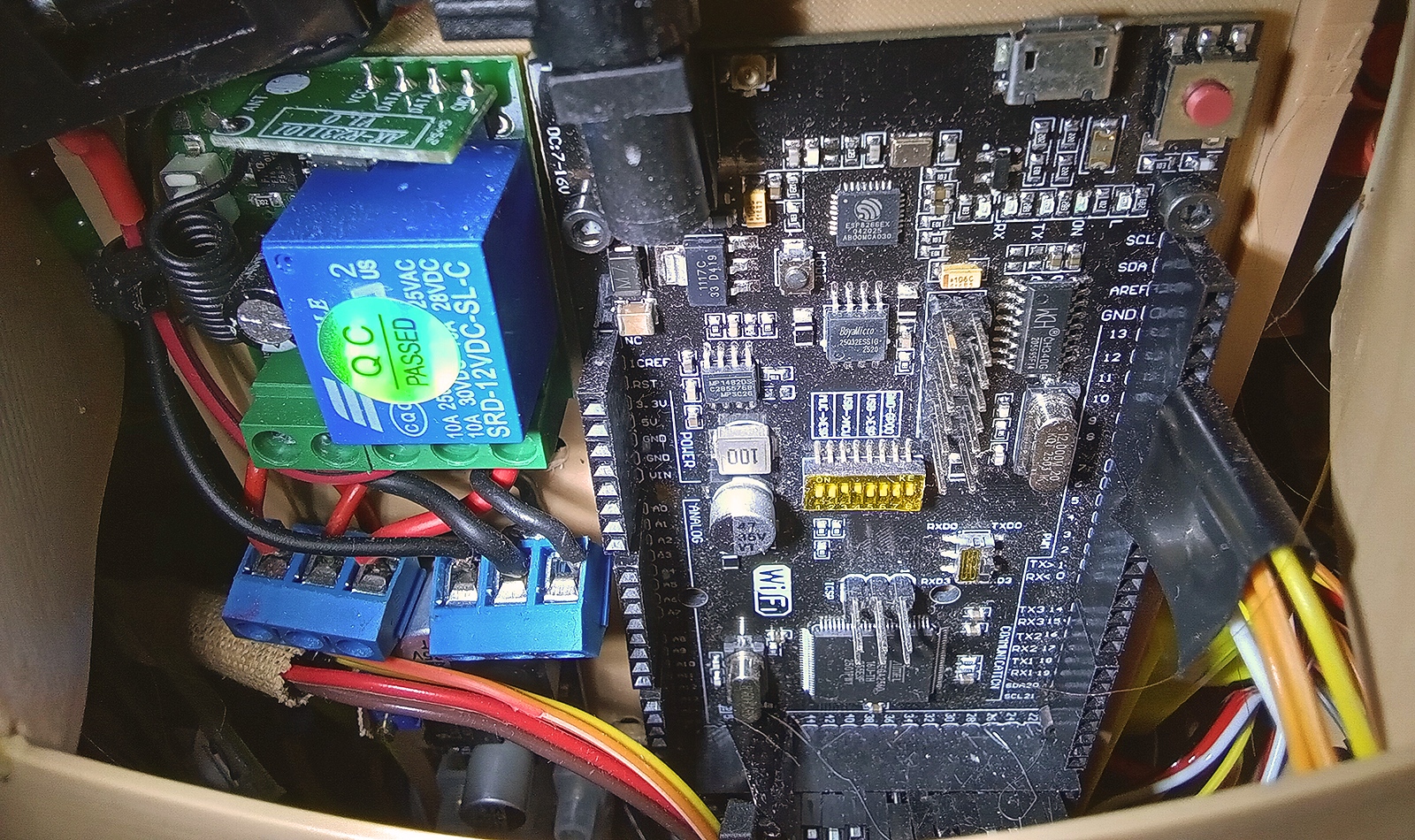
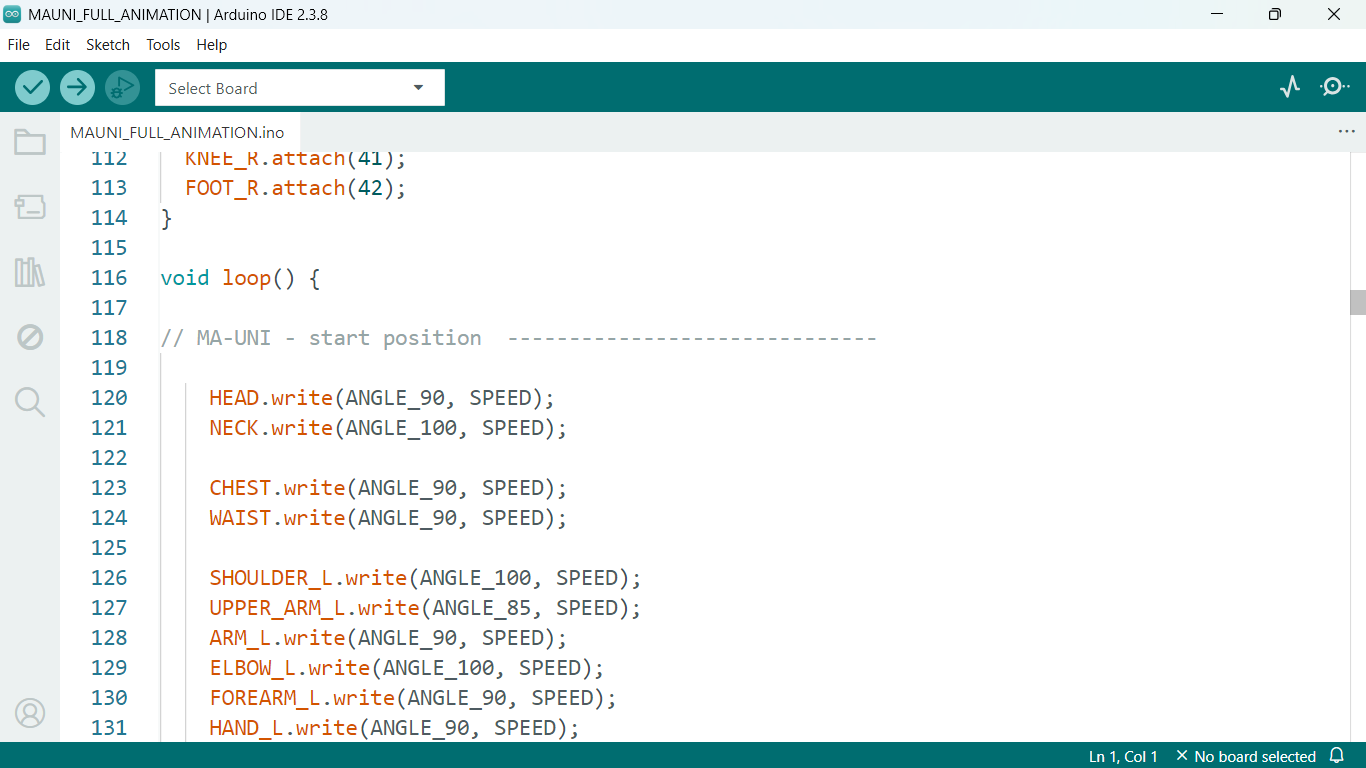
The current system provides programmable movement sequences and coordinated control of the prototype.
MA-UNI's exceptionally lightweight architecture may offer a significant advantage in this respect, potentially reducing the kinetic energy and associated risks of an accidental fall.
Beyond its low overall mass, MA-UNI's structural architecture and human-form body design provide the potential for integrating a soft protective outer layer made from rubberized textiles, elastomeric materials, or other flexible protective structures.
Such a layer could further absorb and distribute impact forces in the event of an accidental fall or unintended movement, helping to protect both the robotic system and people in its immediate surroundings.